Beginner gym workout plan: 3 days a week, full body
New to the gym? Train your whole body 3 times a week (for example Monday, Wednesday, Friday), alternating Workout A and Workout B. Each session takes about 45–60 minutes.
Warm up first (5–8 minutes)
5 minutes of easy cardio or brisk marching on the spot, then 2 lighter sets of your first exercise (about half, then three-quarters of your working weight).
The plan
Workout A
| Exercise | Sets × reps | |
|---|---|---|
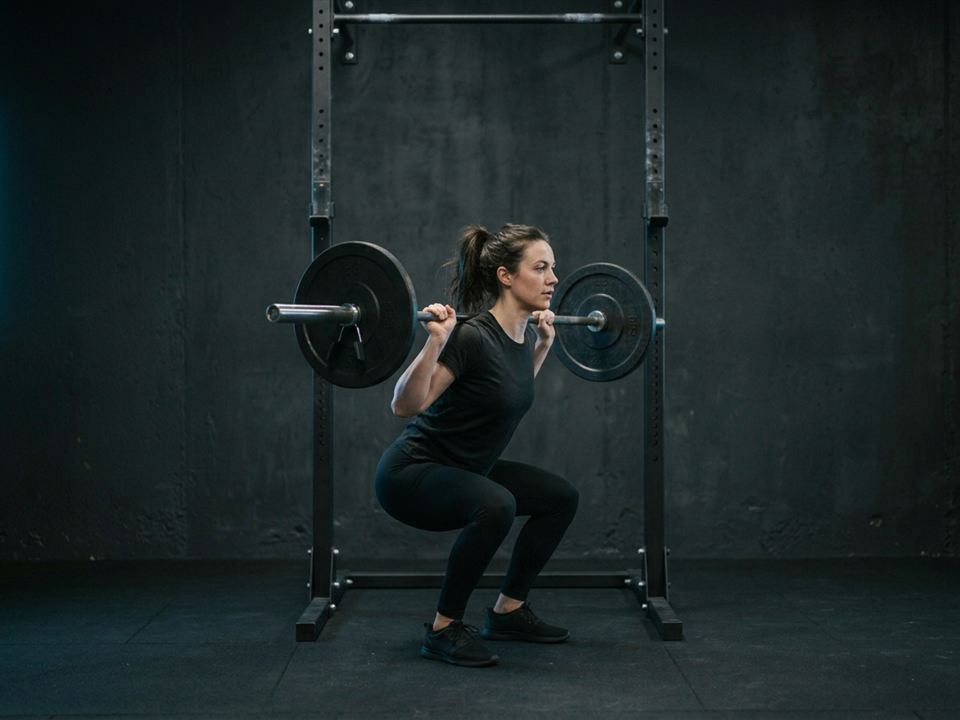 | Back squat Set the bar in a rack at mid-chest height and set the safety bars just below the bottom of your squat. Step under, rest the bar on your upper back (not your neck), grip it just outside your shoulders and stand up to lift it off. Take 2 steps back and set your feet shoulder-width apart, toes out slightly. Take a big breath in, brace hard, and sit down between your knees over 2–3 seconds until your thighs are at least parallel. Keep your chest up and knees pushed out over your toes. Drive up through your whole foot, breathing out at the top. If you fail a rep, lower the bar onto the safety bars. | 3 × 8–10 |
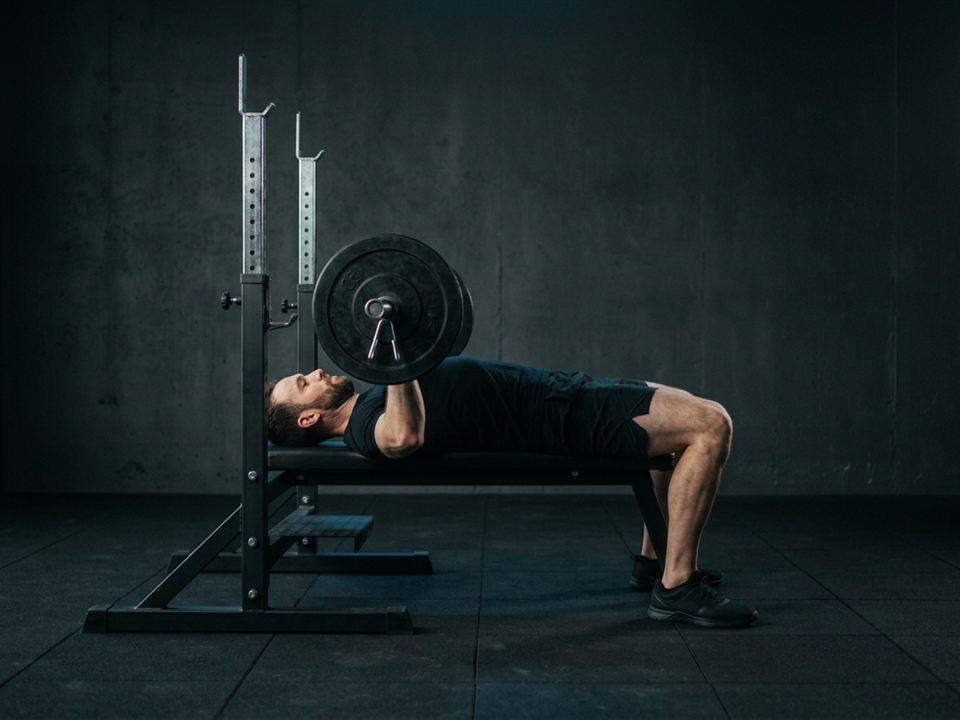 | Bench press Lie on the bench with your eyes under the bar and set the safety bars just below chest height. Plant your feet flat, squeeze your shoulder blades together and down, and grip the bar a little wider than your shoulders. Lift the bar off and hold it over your shoulders with straight arms. Breathe in and lower it over 2–3 seconds to the middle of your chest, elbows at about 45° from your body. Touch lightly, then breathe out and press back up over your shoulders. Use the safety bars or a spotter for heavy sets, and never bounce the bar off your chest. | 3 × 8–10 |
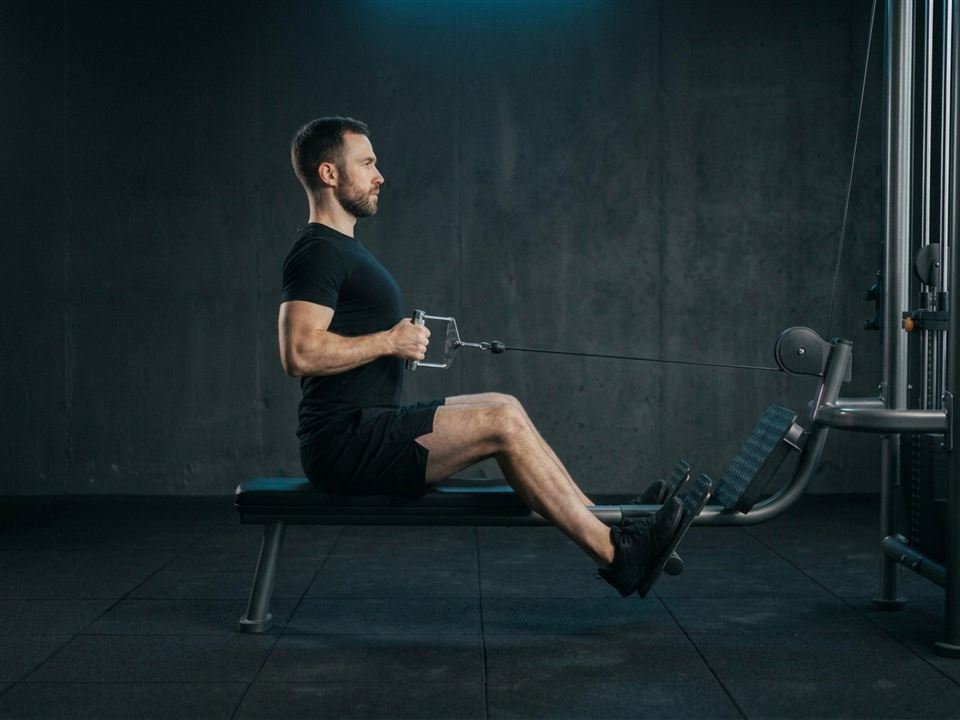 | Seated cable row Sit on the machine with your feet on the plates and knees slightly bent, and grab the handle. Sit tall with your chest up and arms straight. Breathe out and pull the handle to your stomach, elbows close to your sides, squeezing your shoulder blades together. Hold for a second. Let the handle go forward over 2–3 seconds until your arms are straight and you feel a stretch across your back. Don't lean back and forth to move the weight. | 3 × 10–12 |
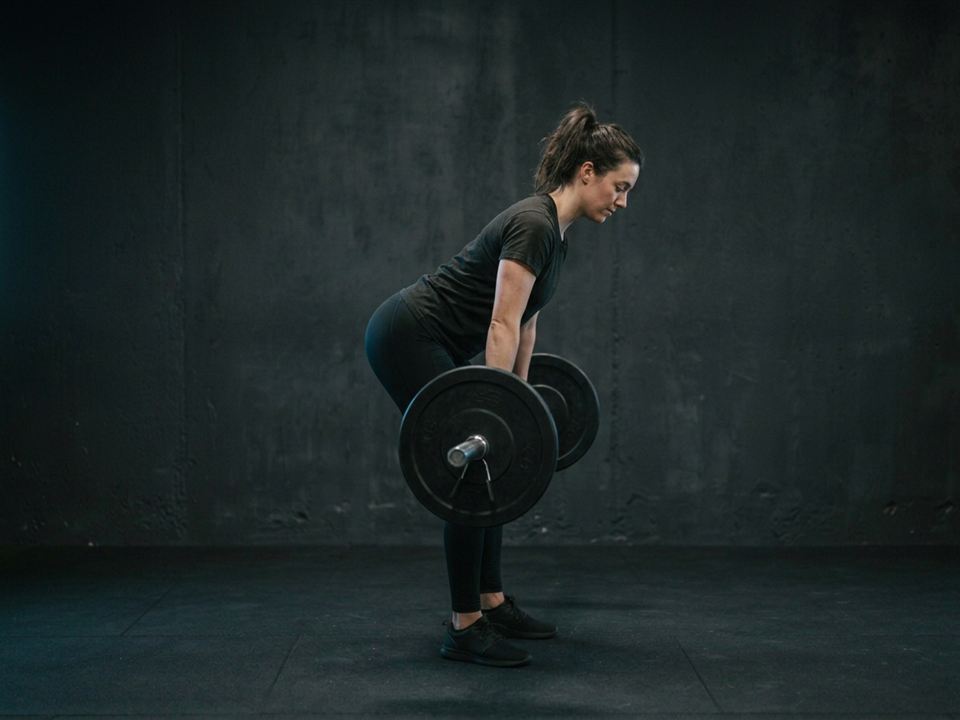 | Romanian deadlift Hold the bar with your hands just outside your thighs, standing tall with your feet hip-width apart. Unlock your knees slightly. Breathe in, brace, and push your hips back, sliding the bar down your thighs over 3 seconds while keeping your back flat and the bar touching your legs. Stop when you feel a strong stretch in your hamstrings, usually just below the knees. Breathe out and squeeze your glutes to bring your hips forward and stand tall. Don't round your back or bend your knees more as you go down. | 3 × 8–10 |
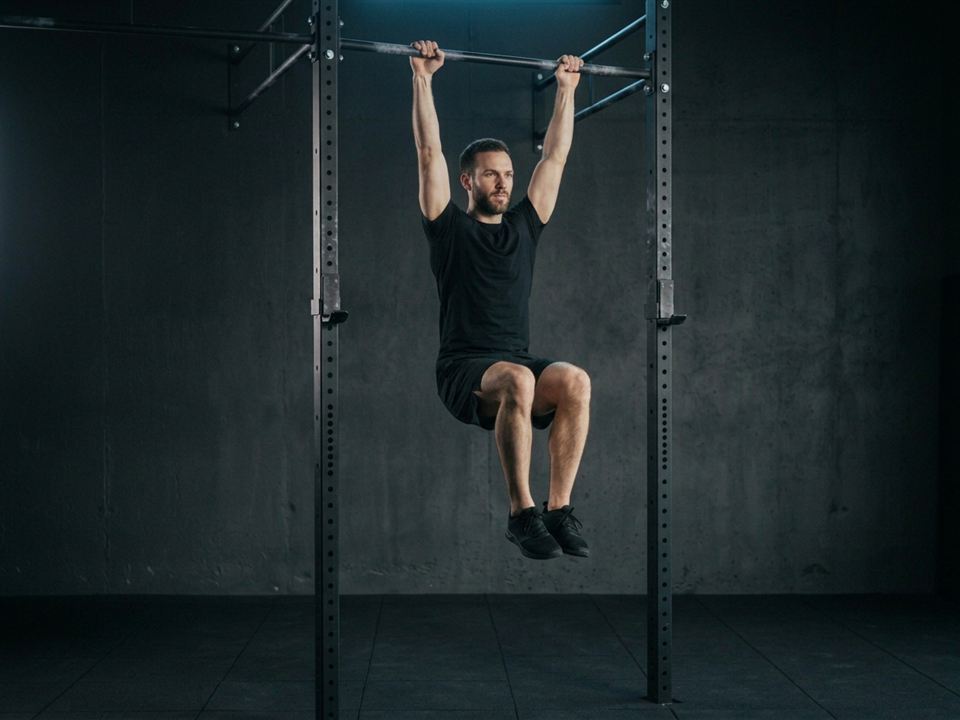 | Hanging knee raise Grab a pull-up bar with an overhand grip, hands shoulder-width apart, and hang with straight arms and your shoulders pulled down away from your ears. Brace your stomach. Breathe out and lift your knees towards your chest, curling your hips up slightly. Lower over 2–3 seconds until your legs are straight. Stop any swinging before the next rep. Use the elbow straps or a captain's chair if your grip gives out first. | 3 × 10–12 |
Workout B
| Exercise | Sets × reps | |
|---|---|---|
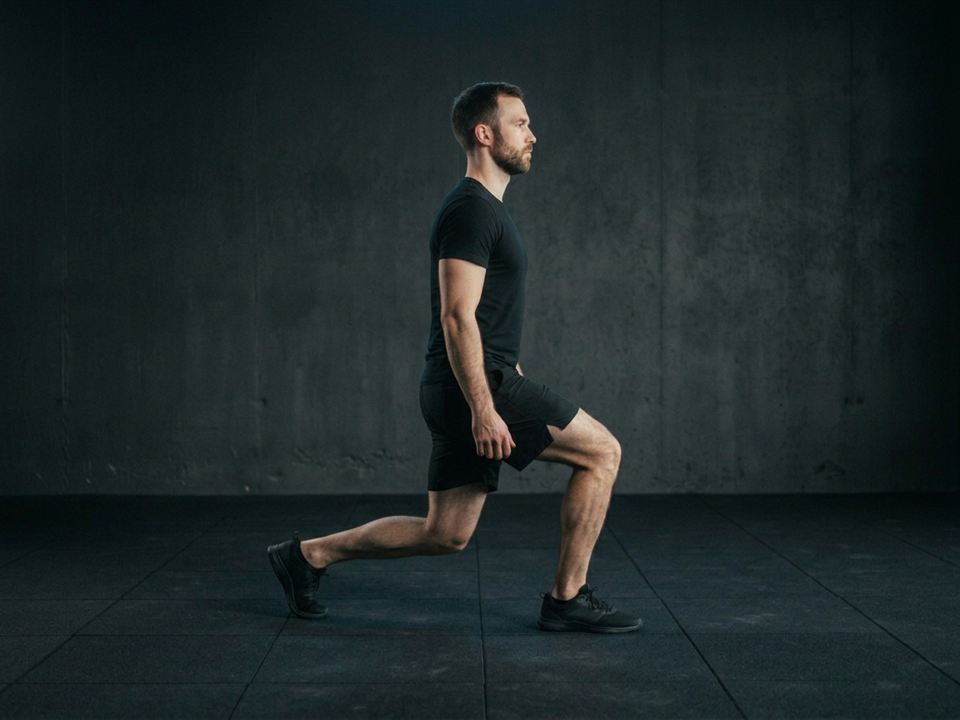 | Walking lunge Stand tall with your feet together, hands on your hips or holding light weights. Take a long step forward. Lower your back knee towards the floor over 2 seconds until both knees are at about 90°, front knee over your ankle. Push through your front heel and bring your back foot through into the next step. Keep your chest up and take steady steps. Count each step as one rep, or each pair as one if your plan says each leg. | 3 × 10 each leg |
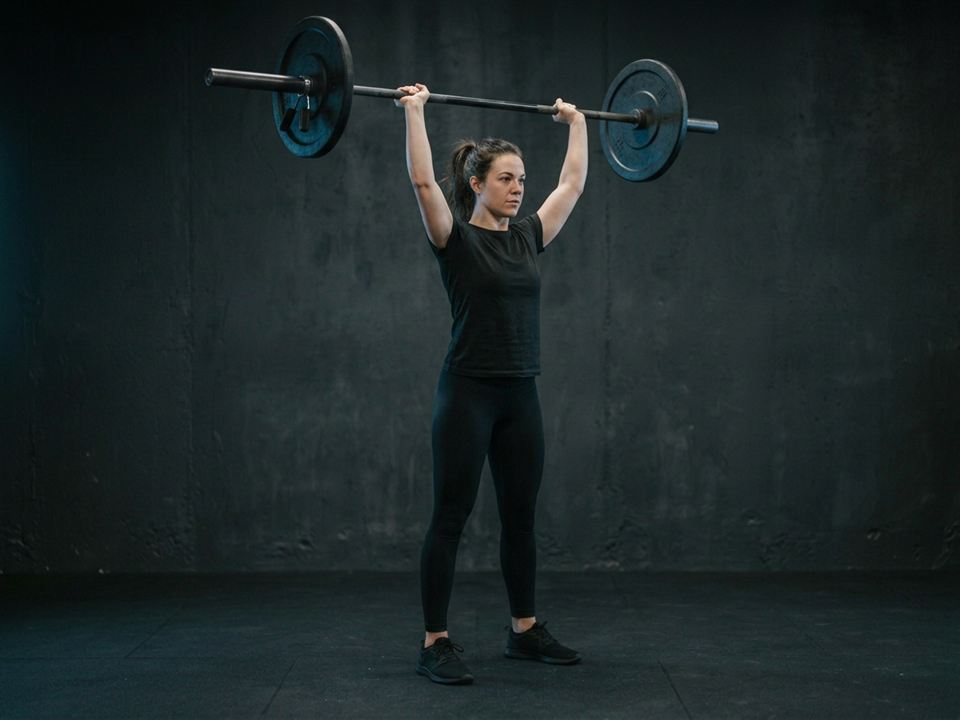 | Overhead press Set the bar at upper-chest height in a rack. Grip it just outside your shoulders and stand with your feet hip-width apart, the bar resting on the front of your shoulders. Squeeze your glutes and brace your stomach. Breathe out and press the bar straight up, moving your head back slightly to let it pass, then push your head through once the bar is past your face. Lock out with the bar over the middle of your feet. Lower over 2 seconds back to your shoulders. Don't lean back to get the bar up. | 3 × 8–10 |
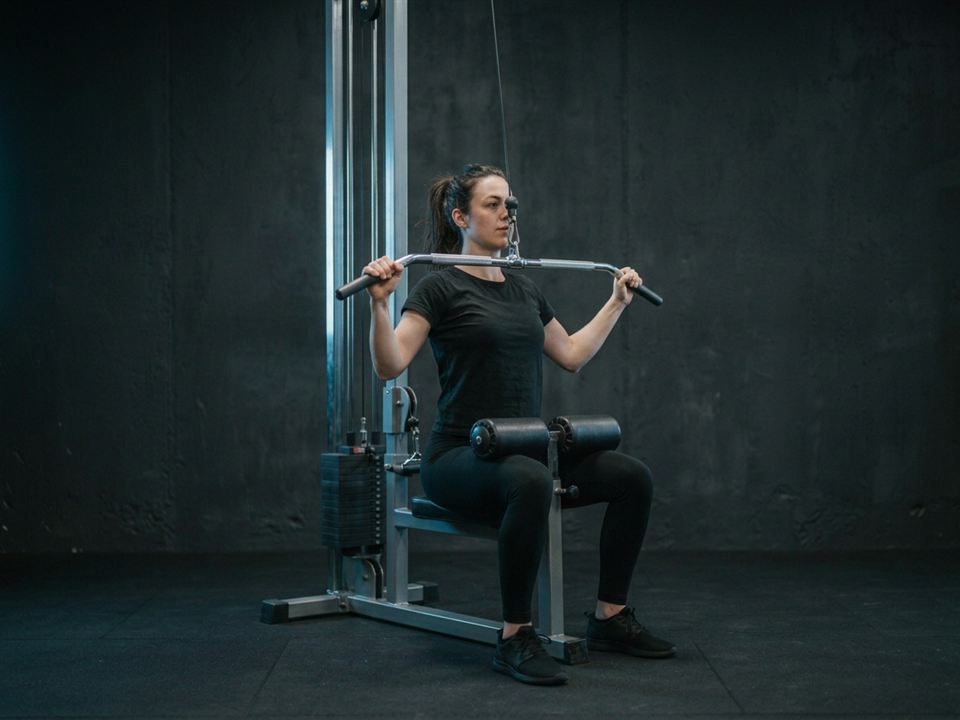 | Lat pulldown Set the thigh pad so your legs are locked in. Grip the bar a little wider than your shoulders, palms facing away, and sit down with your arms straight. Lean back slightly and lift your chest. Breathe out and pull the bar down to your upper chest, driving your elbows down and back. Squeeze for a second. Let the bar rise over 2–3 seconds until your arms are straight. Don't pull the bar behind your neck or swing your body. | 3 × 10–12 |
| Romanian deadlift Hold the bar with your hands just outside your thighs, standing tall with your feet hip-width apart. Unlock your knees slightly. Breathe in, brace, and push your hips back, sliding the bar down your thighs over 3 seconds while keeping your back flat and the bar touching your legs. Stop when you feel a strong stretch in your hamstrings, usually just below the knees. Breathe out and squeeze your glutes to bring your hips forward and stand tall. Don't round your back or bend your knees more as you go down. | 3 × 8–10 |
| Hanging knee raise Grab a pull-up bar with an overhand grip, hands shoulder-width apart, and hang with straight arms and your shoulders pulled down away from your ears. Brace your stomach. Breathe out and lift your knees towards your chest, curling your hips up slightly. Lower over 2–3 seconds until your legs are straight. Stop any swinging before the next rep. Use the elbow straps or a captain's chair if your grip gives out first. | 3 × 10–12 |
Week 1: A, B, A. Week 2: B, A, B. And so on. Rest 90–120 seconds between sets.
How heavy should it be?
Pick a weight you could lift for 2–3 more reps at the end of each set. You should finish feeling worked, not wrecked. Good form always beats more weight.
How to progress
- When you hit the top of the rep range on every set with good form, add a little weight next time (about 2.5 kg, or the next dumbbell).
- Write down what you lift so you can beat it next week. StrengthlyAI shows you what you lifted last time and what to aim for today.
- Every 4th week, do a lighter week with fewer sets to recover.
No machine free? Swap it
Every exercise has alternatives that work the same muscles: see the full exercise library.
Frequently asked questions
How long until I see results?
Most beginners get noticeably stronger within 3–4 weeks. Visible changes usually take 8–12 weeks of consistent training and eating enough protein.
Should beginners do cardio too?
Walking and some cardio are great for your health. Aim for 7,000–10,000 steps a day and add cardio you enjoy, ideally on non-lifting days or after weights.
Is 3 days a week enough?
Yes. Three full-body sessions train every muscle about three times a week, which is plenty for beginners to make great progress.
What if something hurts?
Mild muscle soreness is normal. Sharp or joint pain isn't: stop that exercise and swap it. Check with a doctor or physio if pain continues.
General guidance based on established research, not medical advice. Check with your doctor before starting a new exercise or nutrition programme, especially if you have a health condition or are pregnant.
More guides
- How much protein do I need a day? UK guide with a quick table
- Cheap high-protein foods in the UK: cost per 20 g of protein
- 7-day high-protein meal plan with a shopping list
- How to calculate a calorie deficit to lose fat (with a worked example)
- Home workout plan with no equipment: 3 days a week
- Dumbbell-only workout plan for home: 3 days a week
- Family meal planning: one shop, everyone fed, your protein sorted